






Quick Answer
Remote companies can offer meaningful perks without heavy overhead by replacing fixed, one-size-fits-all programs with defined allowances, spending accounts, and automated claims workflows. The employer controls the budget and eligible categories, while employees choose support that fits their work, health, and home setup.
Introduction
Flexible remote work benefits give distributed employers a practical way to compete for talent without committing to broad coverage that employees may not use. A defined wellness or health allowance can cover needs ranging from therapy and fitness to ergonomic equipment and learning, while keeping spending visible. This matters in Canada because only 17.4% of workers were mostly at home in mid-2025, yet distributed work remains a durable operating model for many knowledge-based teams. Benefit design now has to accommodate different work locations, different personal needs, and tighter finance controls.
Key Takeaways:
Defined allowances make perk costs predictable for remote employers.
Flexible categories let employees support their actual work and wellness needs.
Automation reduces reimbursement administration across distributed teams.
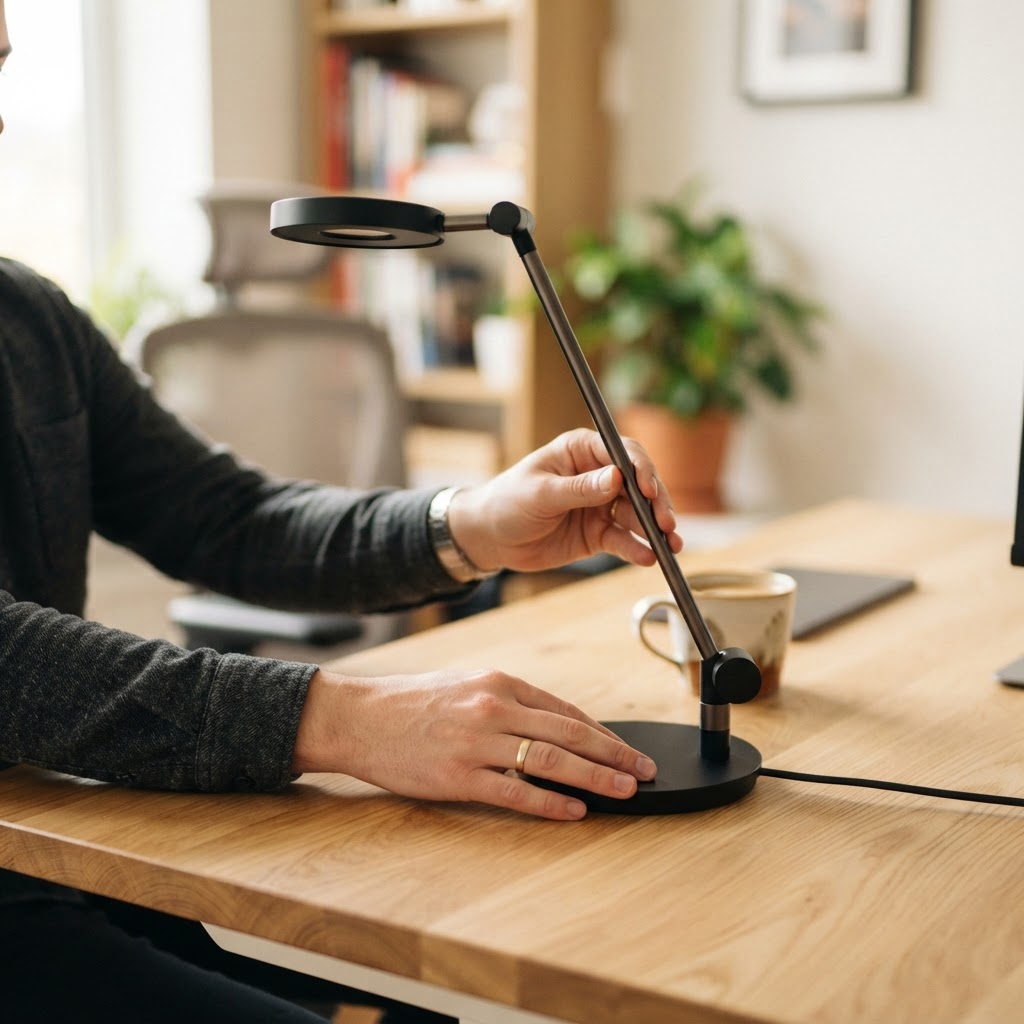
Remote work benefits without fixed program costs
Traditional plans can be valuable, but their structure often creates mismatches for remote-first businesses: coverage is standardized, enrolment work is recurring, and the cost does not necessarily reflect employee usage. Remote work has also changed substantially over time: about 7% of Canadian employees usually worked most of their hours from home in 2016, compared with roughly 40% in April 2020, according to the same Canadian remote-work data cited above. As one specific example of how employers quantify this cost, British Columbia's public service notes that benefits add over 20% to overall compensation for its own employees, and the province's overall compensation information illustrates why employers generally benefit from managing benefit spending deliberately, even though the exact proportion will vary by employer and sector. A flexible program starts with a budget decision, then lets the organization define the categories that advance employee support.
Why defined allowances fit distributed teams
A wellness spending account works because it separates the employer's cost commitment from each employee's spending decision. Instead of paying for a fixed bundle of services, a company can assign individual or department-level allowances and allow claims only for pre-approved categories. This structure can support a digital health and wellness allowance without requiring HR to negotiate each request separately.
Budget control: Set allowances before claims begin.
Relevant choice: Fund health, wellness, learning, or equipment needs.
Location neutrality: Apply the same policy across distributed staff.
Clear boundaries: Define eligible expenses in writing.
Usage insight: Review categories employees actually use.
Dependent coordination: Eligible receipts may be submitted to both plans.
Depending on plan design, reimbursement can reach 100% of eligible expenses, subject to plan limits. As one illustration of how a defined-credit structure works in practice, British Columbia's public service provides its employees with $200 in annual general flex credits, showing how a fixed credit can still give employees choice within a set budget.
Where tax treatment requires discipline
Health-related and wellness-related funds should not be treated as interchangeable. A private health services plan must direct all or substantially all, generally 90% or more, of premiums toward expenses eligible for the medical expense tax credit to meet the stated Canada Revenue Agency standard described in health spending accounts guidance. Employers should therefore document categories, retain appropriate claim records, and have qualified tax and legal advisers review the plan design before launch.
A wellness program can still be useful where a claim does not fit a health account, but its tax handling may differ. The operating rule is simple: assign a purpose to each account, state the eligible expense categories clearly, and avoid promising tax outcomes that depend on facts outside the plan document.

How employee benefits software reduces administration
The operational challenge is not approving a single receipt. It is applying the same rules consistently when employees submit claims from several provinces, managers have limited time, and finance needs a clean record of approved spending. An automated benefits platform centralizes eligibility rules, balances, claim status, and reporting so that the program does not become a spreadsheet exercise.
Compare fixed coverage with a flexible account model
These approaches are different in kind. Group insurance pools coverage under a plan design, while a spending account allocates employer-funded dollars within selected categories. The comparison below helps leadership decide which administrative and financial controls matter most for a remote team.
Decision factor | Traditional group insurance | Flexible spending account |
|---|---|---|
Employer cost structure | Premium-based plan structure | Defined allowance set by employer |
Employee choice | Coverage follows plan design | Claims follow selected categories |
Remote administration | Enrolment and plan administration | Digital claims and balance tracking |
Home office support | Depends on plan terms | Can be an eligible category |
Program visibility | Depends on reporting provided | Usage can be reviewed by category |
The central tradeoff is certainty versus breadth. A defined allowance gives finance a known commitment and gives employees more personal choice, while group coverage may remain important where an organization needs insurance-based protection rather than reimbursable flexibility. Context also matters: only 17.4% of Canadian workers were mostly at home in mid-2025, while roughly 78% worked solely outside the home, according to the same Canadian remote-work data cited above. A flexible model can therefore support employees wherever they work without assuming that every role follows the same arrangement.
Build a claims process that employees will use
Managing remote work expenses effectively requires fewer handoffs, not more policy language. Employees should be able to submit a receipt, select a category, see whether the claim is approved, and track their remaining balance in one place. HR should be able to apply policy rules consistently and finance should receive records that support reconciliation.
Managing remote reimbursement claims becomes manageable when the policy answers predictable questions before they reach a manager: what is eligible, what documentation is required, which account applies, and what happens if a claim is declined. This prevents informal exceptions from becoming the real benefits policy.
Implement flexible employee benefits for remote teams
A durable program begins with business constraints, not a catalogue of perks. Finance should establish the allowance, HR should define employee groups and eligible categories, and leadership should decide how the program supports the company's talent strategy. This is where flexible benefits in Canada become a management system rather than an ad hoc reimbursement pool.
Set the budget, eligibility rules, and governance
Start by identifying the outcomes worth funding. A remote team might prioritize home office equipment, mental health support, fitness, medical care, professional development, or recognition for project milestones. Then separate expenses that belong in a health spending account from those assigned to a wellness account or recognition program.
Write down who receives an allowance, whether amounts vary by employment status or department, when employees can make claims, what documentation is required, and whether unused funds roll forward. GoKlaim allows employers to customize categories and individual or department-level allowances, while employees can submit claims, follow approvals, and view balances through its app or web portal. A practical guide to setting up a WSA is useful when converting these decisions into a launch-ready policy.
Choose technology that removes recurring work
The platform should enforce the policy employees receive, not create a separate manual process behind it. GoKlaim combines health and wellness spending accounts with rewards and recognition, analytics, and reporting, using flat-rate pricing and no hidden fees according to its company information. For a distributed employer, that means a single operating environment for claims, balances, recognition events, and benefit usage rather than disconnected requests across chat, email, and payroll.
Recognition also matters when teams rarely share physical space. Milestone acknowledgements, peer-to-peer recognition, and project-based rewards can complement a spending account by making appreciation visible without creating another fixed employee program.

Conclusion
Remote perks do not need to become a permanent overhead problem. Set a defined budget, distinguish health expenses from broader wellness expenses, publish clear claim rules, and use a system that keeps approvals and reporting organized. For Canadian remote companies seeking flexible support with controlled spending, GoKlaim is a practical choice because it lets employers configure health, wellness, and recognition programs around their own allowance rules. The result is a benefits model that can adapt as the team, work arrangements, and employee needs change.
Ready to reduce benefits administration? GoKlaim can help build a flexible remote perks program.
Frequently Asked Questions (FAQs)
How to manage remote employee benefits in Canada?
Managing remote employee benefits in Canada starts with a written policy that defines employee eligibility, spending categories, documentation requirements, approval ownership, and tax treatment, then uses a centralized system so employees and administrators work from the same rules regardless of province.
Can remote employees claim home office equipment?
Remote employees can claim home office equipment when their employer explicitly includes it as an eligible expense category, specifies acceptable documentation, and applies the same rules consistently, because eligibility is determined by the employer's program design rather than by remote work alone.
How does the GoKlaim benefits app work?
The GoKlaim benefits app works by allowing employees to submit claims, track approval status, view account balances, add dependents, and receive reimbursements through mobile or web access, while employers manage allowance settings, eligible categories, and reporting from the platform.
Can benefits be customized for remote employees?
Benefits can be customized for remote employees by assigning allowances by individual or department and selecting relevant categories such as mental health support, fitness, professional development, medical care, and home office equipment, which avoids forcing every employee into the same usage pattern.
Why choose a flexible spending account over group insurance?
A flexible spending account provides a defined employer-funded allowance and employee choice within approved categories, whereas group insurance provides coverage through a plan structure, so the appropriate model depends on whether the organization needs reimbursable flexibility, insurance protection, or both.
What are the benefits of a wellness spending account?
The benefits of a wellness spending account include greater employee choice, support for non-medical wellbeing categories chosen by the employer, predictable allowance-based budgeting, and a way to recognize that a gym membership, course, ergonomic item, or wellness service may matter differently to each employee.
About the Author
Stephen Bray is Chairman of Moana Technologies and a serial chairman across Koverhoop and InnoStart Capital. A CPA, CA, CF, and CBV, he brings corporate finance, business valuation, and health and wellness benefits expertise to practical questions about modernizing legacy business models.